Energy & Data Hub
Texas’ First Purpose-Built, Off-Grid Energy & Data Center
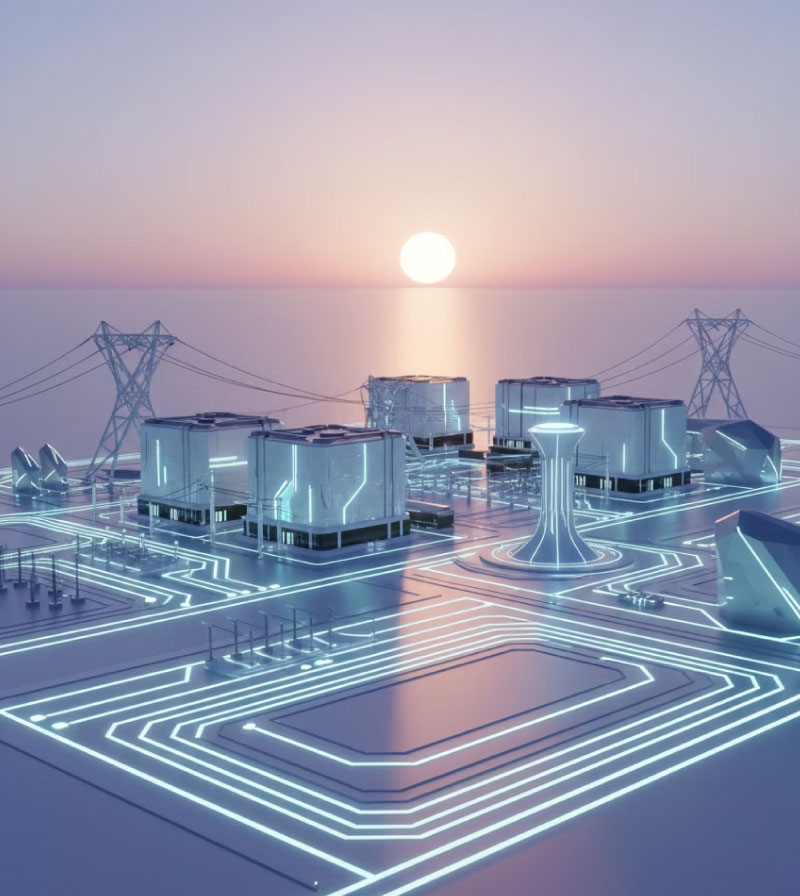
A purpose-built digital infrastructure platform for the next era of compute, where utility-scale energy, hyperscale data, and high-density fiber converge into one seamless, future-ready ecosystem.
The Location
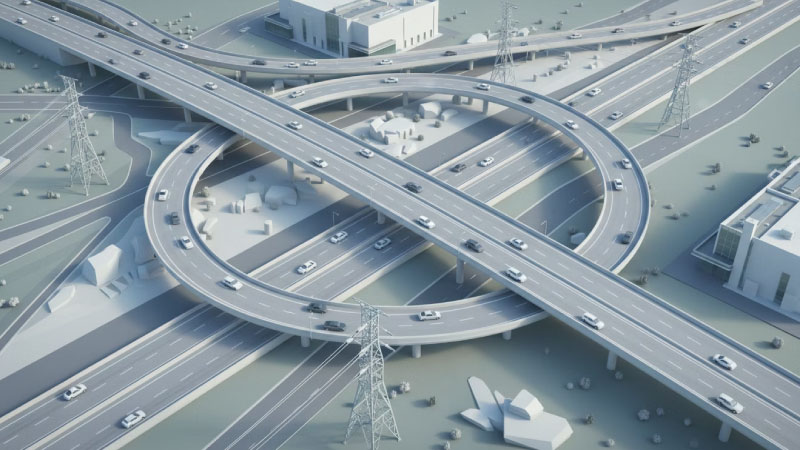
This is a power-first, non-replicable digital infrastructure estate engineered for enterprises that build at a continental scale. Strategically situated within one of Texas’s primary freight and data corridors, the campus offers efficient access to multiple metropolitan markets while benefiting from the permitting clarity and operational flexibility of a rural jurisdiction.
Its differentiated value begins with exceptional power redundancy, enabled by dual natural gas transmission pipelines, and extends to a mature long-haul fiber network. Together, these elements form a location-first platform purpose-built for data centers, private power generation, and hybrid infrastructure deployments.
The Land
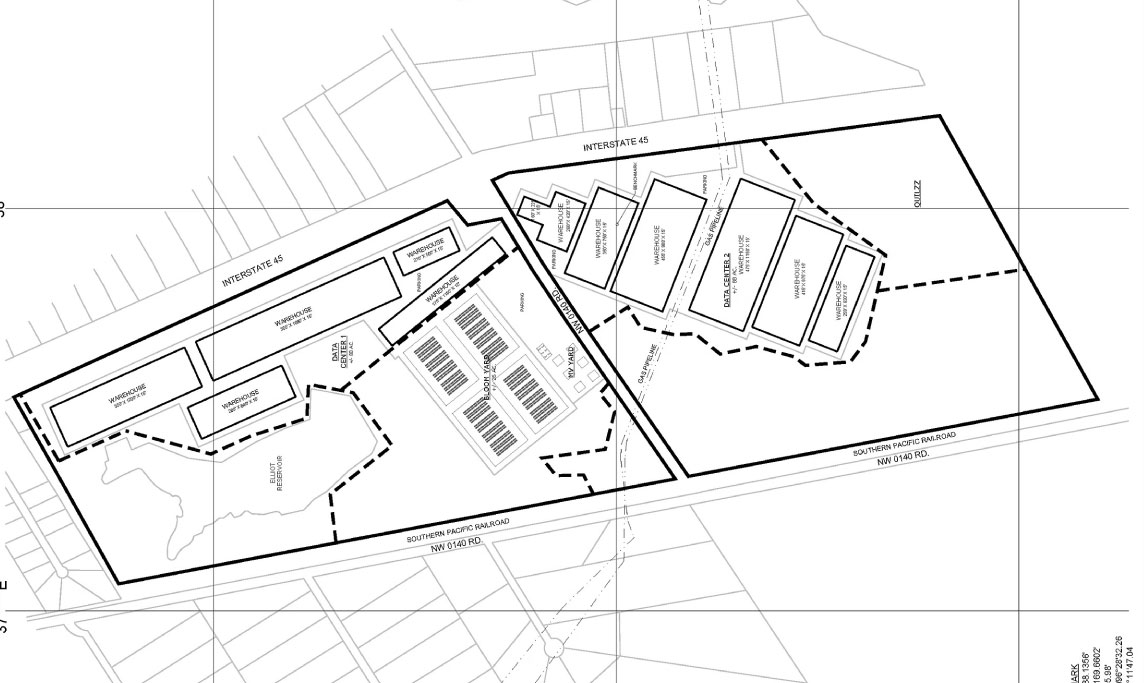
Spanning more than 450 contiguous acres under unified control, the campus offers a rare combination of scale and readiness. The site has been deliberately shaped and extensively evaluated, with mineral rights owned, surface waivers secured, and advanced engineering diligence, including surveying, geotechnical work, and conceptual grading, underway or already completed.
As a result, the land functions not as raw acreage, but as pre-aligned infrastructure. It is structured for phased development, dedicated power deployments, and long-horizon growth measured in megawatts delivered and workloads sustained.
The Energy Infrastructure
At the heart of the offering is a distinctive and valuable industrial-grade energy posture, guaranteed by dual high-pressure Energy Transfer natural gas pipelines that physically bisect the property, providing regional throughput exceeding 2 Bcf/day and secured firm fuel commitments.
Unlike typical greenfield sites, power here is a designed, engineered, fuel-backed certainty, not a negotiation with a utility queue. In a power-constrained Texas landscape, this campus stands apart as one of the few locations where scale, dispatchability, and independence can coexist, allowing the site to operate entirely islanded with optional pathways for grid interconnection and ERCOT market participation when desired.

Modular Fuel-Cell Concept
This fuel architecture directly enables a hybrid private generation platform anchored by solid-oxide fuel cells and complemented by turbine-based capacity. The initial phase begins with a 104 MW behind-the-meter SOFC foundation, engineered for continuous baseload operation, exceptional electrical quality, and minimal water usage.
From there, the system expands in modular blocks — 300 MW in the first major ramp, then onward to 800 MW and beyond — ultimately supporting the level of power density required for hyperscale cloud zones, AI training clusters, or grid-adjacent industrial load.
Potential for Scale
The campus masterplan is aligned with hyperscaler demand curves, envisioning rapid, modular deployments early, followed by large-scale clustering as workloads expand. The immediate opportunity is Phase I (approximately 220 acres), engineered for activation with pads designed to support up to five million square feet of compute structures, while the remaining 200+ acres serve as a long-term land bank reserved for future expansion into high-density AI deployments, hydrogen power, or grid-scale storage.
This structure is designed to support a wide range of commercial models, including build-own-operate structures, PPAs, modular leasing, or joint development. This exceptional flexibility grants operators sovereignty over cost, risk, and expansion cadence, and offers investors multiple paths to revenue and exit.

The Data Center
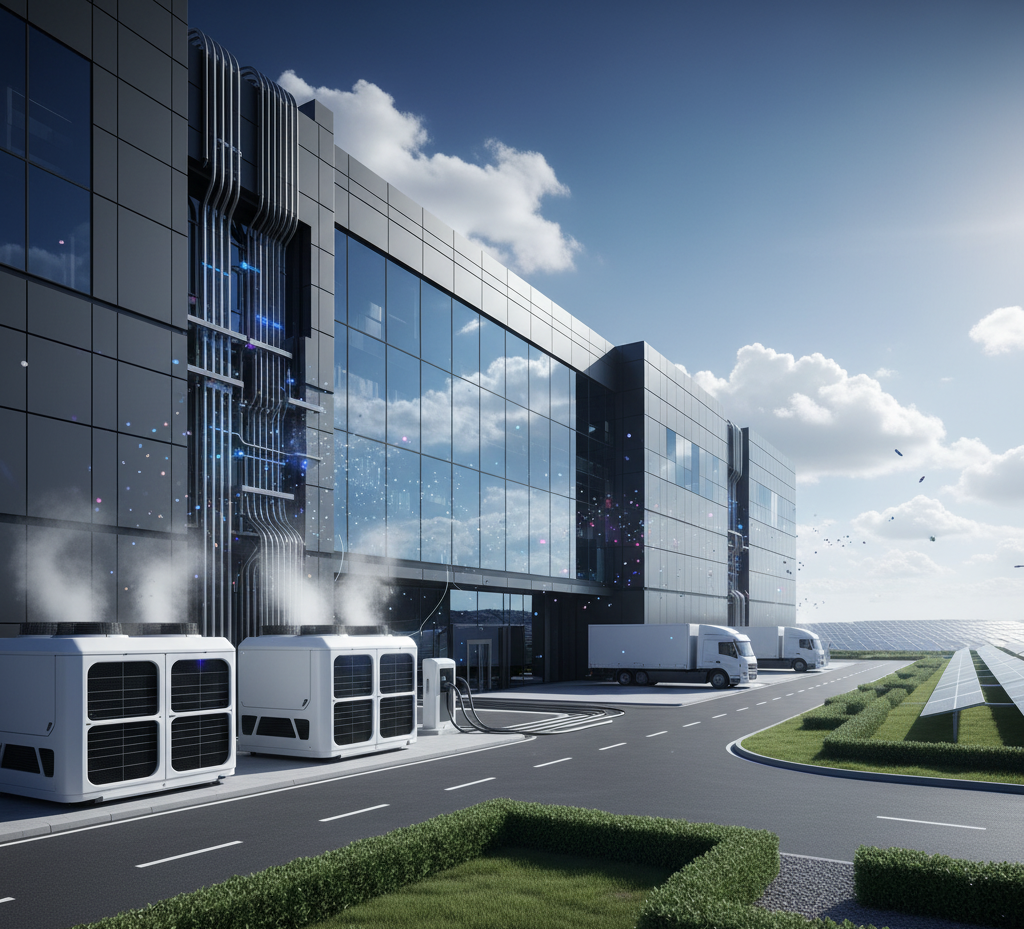
The campus has been designed to behave like a hyperscale Availability Zone (AZ) from the earliest phase, featuring wide corridors, deep setbacks, and power-centric pad layouts that sustain continuous expansion without reconfiguration. The development foundation is highly predictable, with pre-defined MEP engineering frameworks covering cooling strategies for high-density workloads, UPS topologies, water management, and data hall architectures suitable for Tier III and Tier IV outcomes.
Due to the private power and abundant fiber, the campus efficiently supports both latency-sensitive workloads positioned near Dallas and cost-optimized bulk compute, AI training, and storage environments requiring multi-hundred-megawatt deployments—traits increasingly challenging to secure elsewhere in the state.
The Data Infrastructure
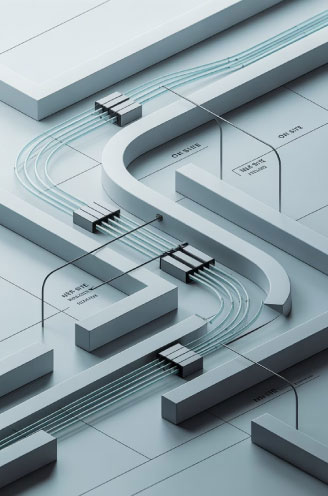
Supporting the compute layer is a fiber ecosystem that rivals near-metro campuses, with two carriers directly on the property and two more long-haul trunks within a mile, enabling true A/B entry with minimal construction. This position achieves sub-1.5 ms RTT to Dallas Infomart and 2–3 ms RTT to Houston carrier hotels, allowing the campus to function as a near-metro hyperscale node while retaining rural economics.
Multiple Tier-1 providers, dark-fiber operators, and wave-capacity carriers traverse the regional corridor, creating route diversity critical for availability zone redundancy, multi-region replication, and direct peering with cloud on-ramps. Fiber, like power, is fully prepared for scale.
Water & Cooling
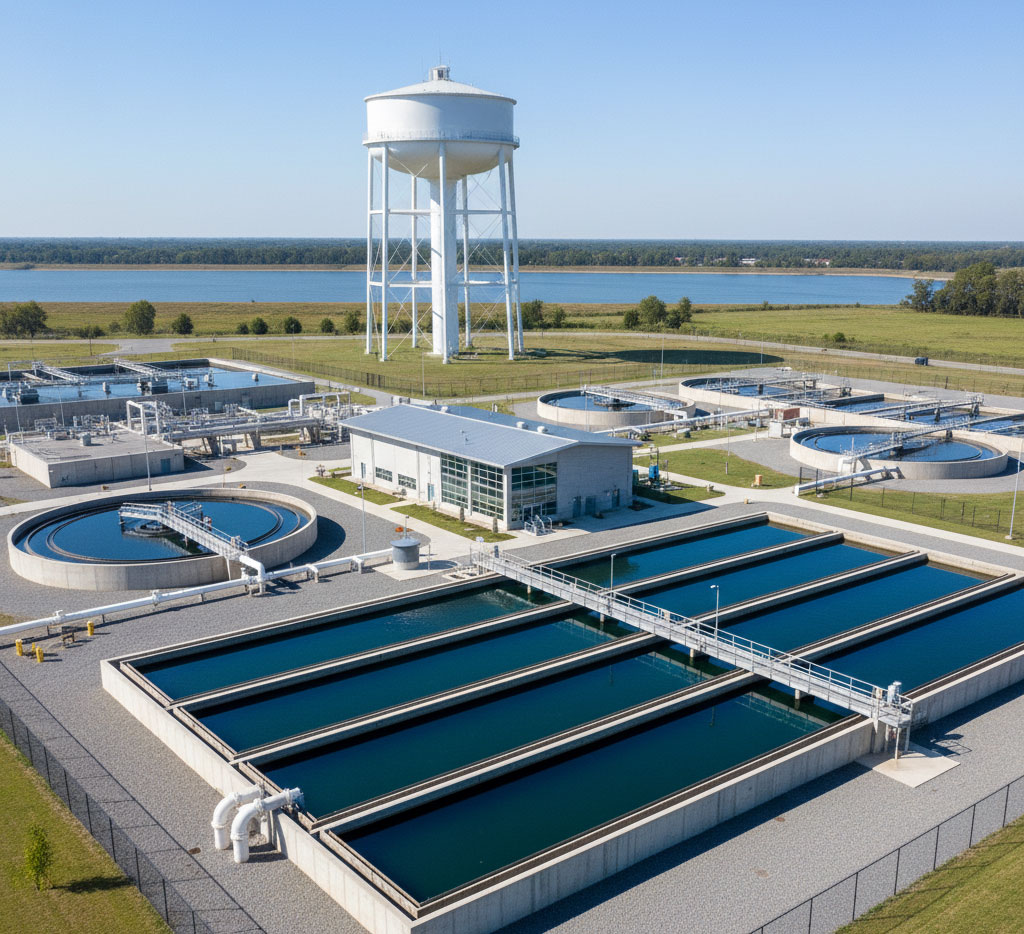
Cooling optionality is central to the campus design, featuring a robust portfolio of water pathways for evaporative, hybrid, or immersion cooling systems. Municipal supply, on-site reservoir access, and hydrology-supported well strategies are available, ensuring resilience during periods of extreme demand.
Raw water availability, ranging from 1 to 10 million gallons per day, provides significant headroom for both short-term deployments and long-term scale.
As with all other campus utilities, the water strategy is engineered not merely to serve tenants, but to endure.
Low Risk Development
Significant engineering has been completed across civil, electrical, fuel, telecom, and data center domains, with mapping, environmental diligence, hydrologic modeling, grading concepts, and entitlement pathways in advanced stages.
This comprehensive preparedness includes vendor-validated SOFC designs, turbine architecture, preliminary substation frameworks, and defined telecom routes/meet-me-room specifications.
Civil engineering is now at the point where full construction documents can proceed, establishing a clean path to shovel-ready designation. This advanced level of due diligence significantly reduces risk, accelerates underwriting, and positions the campus for immediate institutional engagement.

A Foundation for Long-Term Value Creation
This campus offers more than acreage. It offers a vertically integrated foundation for long-term digital and energy infrastructure investment. As engineering milestones progress from shovel-ready land to powered land to power-ready data center certification, the property naturally transitions through successive phases of value uplift.
For developers, it is a fast-track environment. For hyperscalers, a rare combination of autonomy, redundancy, and expandability. For investors, a durable platform with clear exit pathways.
At a time when power scarcity, entitlement delays, and fiber limitations constrain development across Texas, this project stands as a counterpoint: a site defined by capability instead of compromise.
Connect With Our Team
For more information, engineering documentation, or to explore development partnership opportunities, connect with our leadership team. Detailed site packages, technical briefs, and updates on Phase I and II are available to qualified parties.
© 2025/2026 Hedgehogusa.net. All rights reserved.